
Fact: One in three women will experience pelvic floor dysfunction at some point in their lives: yet most commercial gyms don’t address it at all.
Here’s the uncomfortable truth: traditional fitness spaces treat women’s bodies as if they’re just smaller versions of men’s bodies. They ignore the reality that pregnancy, childbirth, hormonal shifts, and aging create specific needs that demand specialized training approaches. And when you’re dealing with pelvic floor concerns: whether it’s stress incontinence during box jumps, discomfort during intimacy, or postpartum recovery: the last thing you need is a one-size-fits-all program delivered in a crowded group class.
If you’ve ever leaked during a workout, felt pressure “down there” after exercise, or wondered if you’re doing more harm than good with certain movements, you’re not alone. And more importantly, you deserve better than hoping YouTube videos and generic advice will solve complex issues that require professional guidance.
Why Big-Box Gyms Can’t Address Pelvic Floor Fitness
Walk into most commercial gyms and ask about pelvic floor training. You’ll likely get blank stares or a recommendation to “just do Kegels.” Here’s why that approach falls short:
Lack of Specialized Knowledge: The average personal trainer certification includes maybe one hour on women’s health topics: and pelvic floor training is often completely absent. Without understanding the progression from pregnancy through postpartum recovery and into menopause, trainers can’t provide the nuanced guidance you need.
One-Size-Fits-All Programming: Group fitness classes prioritize intensity and entertainment value over individual needs. High-impact jumping, heavy lifting without proper breathing mechanics, and core exercises that increase intra-abdominal pressure can actually worsen pelvic floor dysfunction when applied indiscriminately.
No Privacy or Individualization: Discussing urinary leakage, pelvic organ prolapse, or postpartum concerns requires a confidential, judgment-free environment. The open floor of a big-box gym doesn’t provide the discretion necessary for these conversations.
Missing the Progression: Effective pelvic floor fitness isn’t just about Kegels. It’s a comprehensive approach that integrates breathing, core stability, and functional movement patterns: something that requires personalized programming and expert oversight.

The Progressive Approach: Beyond “Just Do Kegels”
Pelvic floor training progresses from foundational exercises to advanced movements that integrate strength, stability, and functional control. Here’s how specialized training actually works:
Foundational Level: Building Awareness
Before you can strengthen your pelvic floor, you need to identify and control these muscles properly. Many women unknowingly bear down instead of lifting up, or they engage their glutes and abs instead of isolating the pelvic floor.
Diaphragmatic Breathing: This preparatory exercise teaches pelvic floor awareness. Inhale through your nose to elongate the pelvic floor, then exhale while lifting and gathering those muscles. This coordination between breath and pelvic floor activation is foundational for every exercise that follows.
Proper Kegel Technique: Sitting or lying down, tighten your pelvic floor muscles (imagine stopping the flow of urine or lifting a blueberry with your vagina) for 3-5 seconds, then release completely. The key is avoiding simultaneous flexion of your glutes and core muscles: isolation matters here.
Fact: It can take several weeks to see results from pelvic floor exercises, which is why consistency matters more than intensity at this stage. Aim for 3-5 times daily as you build foundational strength.
Intermediate Level: Integration with Movement
Once you’ve mastered isolation, you’ll progress to exercises that engage the pelvic floor while moving through functional patterns.
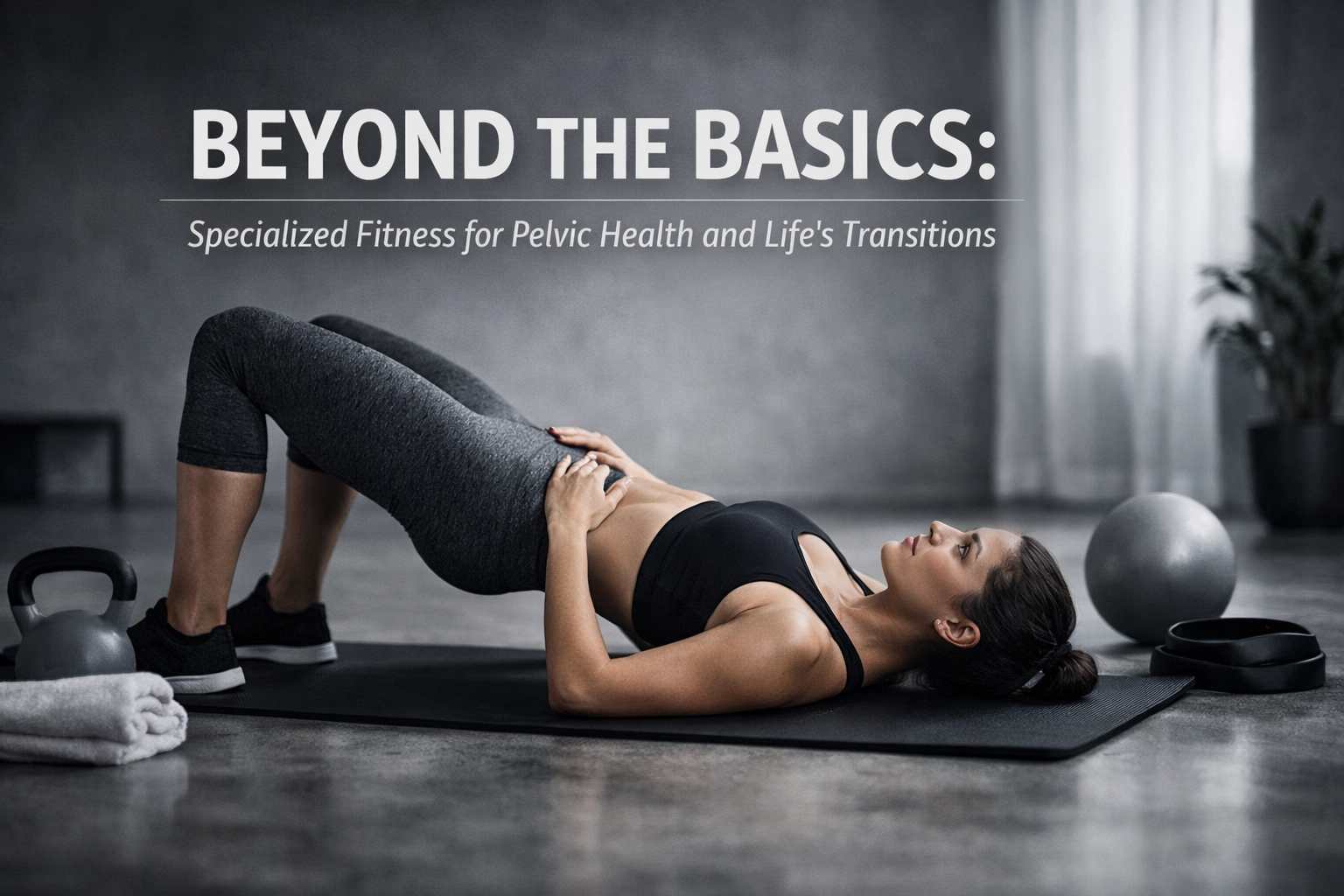
Bridge Exercises: Lie on your back with knees bent, lift your bottom while simultaneously tightening your glute and pelvic floor muscles. Hold for 3-8 seconds and repeat up to 10 times. This integrates pelvic floor activation with hip extension: a pattern you use daily when standing up from chairs or climbing stairs.
Knee Squeezes with Resistance: Place a small ball or pillow between your knees and squeeze for 5-10 seconds while maintaining pelvic floor engagement. Complete 2 sets of 10 repetitions. This adds resistance while maintaining control.
Quick Response Training: The squeeze-and-release exercise builds your pelvic floor’s ability to respond quickly to sudden pressure increases (like coughing or sneezing). Rapidly squeeze and release without holding contractions, completing 10-20 repetitions twice daily.
Advanced Level: Full-Body Integration
The most functional pelvic floor training happens when you integrate these muscles into complex, multi-joint movements that mirror real life.
Controlled Squats: Performed with feet shoulder-width apart and toes slightly out, you’ll engage your pelvic floor on the exhale as you rise from the bottom position. This teaches your body to coordinate pelvic floor activation with load-bearing movements.
Bird Dog Progressions: Starting on hands and knees, you’ll straighten and lift your left leg and right arm simultaneously while bracing your core and maintaining pelvic floor lift. This challenges rotational stability while maintaining pelvic floor control.
Split Tabletop: Lying on your back with knees bent at 90 degrees, slowly separate your thighs while contracting your pelvic floor, then return to center. This exercise specifically targets the transverse abdominis and deep pelvic floor muscles that support your organs.

Pre-Natal Fitness: Training for Two (Safely)
Pregnancy changes everything about how you should exercise. Your center of gravity shifts, your joints become more lax due to relaxin hormone, and your core and pelvic floor are under increasing pressure as your baby grows.
What You Need: A personal trainer in Austin who understands pregnancy modifications isn’t just nice: it’s essential. You need someone who knows when to scale back, which exercises to avoid entirely, and how to maintain strength without compromising pelvic floor integrity.
Specific Considerations:
- Avoiding supine (flat on back) exercises after the first trimester
- Modifying core work to prevent diastasis recti (abdominal separation)
- Maintaining pelvic floor strength without excessive bearing down
- Managing intra-abdominal pressure during strength training
- Adjusting impact levels as pregnancy progresses
The Invictus Difference: Our trainers have specialized education in pre-natal fitness. We don’t just hand you a generic pregnancy workout: we create progressive programs that adapt week by week as your body changes. And critically, we teach you the breathing and bracing strategies you’ll need for labor and delivery.
Post-Natal Recovery: The Fourth Trimester and Beyond
Fact: It takes a minimum of six weeks for your pelvic floor to begin healing after vaginal delivery, and longer if you experienced tearing or had a cesarean section. Yet most women receive zero guidance on how to safely return to exercise.
Jumping back into your pre-pregnancy workout routine without proper progression can lead to pelvic organ prolapse, diastasis recti that doesn’t heal, and long-term pelvic floor dysfunction. Post-natal fitness requires patience, assessment, and specialized programming.
The Recovery Timeline
Weeks 0-6: Focus on gentle movement, breathing exercises, and transverse abdominis activation. This is not the time for crunches, planks, or running: no matter how good you feel.
Weeks 6-12: After medical clearance, begin foundational pelvic floor exercises and progress to gentle strength training. Your trainer should assess for diastasis recti and pelvic floor function before advancing exercises.
Months 3-6: Gradually reintroduce impact and load as pelvic floor strength improves. This progression is individualized: some women need six months, others need twelve.
Beyond Six Months: Continue strengthening and progressing, but remain vigilant about symptoms. Leaking urine, pelvic pressure, or back pain signal the need to modify or regress your training temporarily.

Life Transitions Beyond Pregnancy
Pelvic floor health isn’t just about pregnancy and postpartum. Perimenopause and menopause bring declining estrogen levels, which affect pelvic floor tissue integrity and strength. Women who’ve never given birth can still experience pelvic floor dysfunction due to chronic constipation, heavy lifting, high-impact sports, or simply aging.
Menopause-Specific Considerations: As estrogen declines, pelvic tissues become less elastic and supportive structures weaken. You may notice stress incontinence for the first time in your fifties, even if you never experienced it postpartum. This requires renewed focus on pelvic floor training combined with resistance training to maintain bone density and muscle mass.
The Athletes Who Never Addressed It: If you’re a long-time runner or CrossFit enthusiast who’s been ignoring minor leakage, those “small” issues often worsen during perimenopause. Now is the time to address them before they become major limitations.
The Invictus Approach: Discretion, Expertise, and Results
Here’s what specialized pelvic floor fitness looks like at Invictus Fitness:
1. Private Assessment: We start with confidential conversations about your symptoms, history, and goals. No judgment, no embarrassment: just professional assessment and personalized recommendations.
2. Progressive Programming: Your plan evolves as you do. We don’t rush progression, and we’re never afraid to regress temporarily if symptoms appear.
3. Education-Focused: You’ll understand why we’re choosing specific exercises and how to apply these principles outside the gym. We teach you to become the expert on your own body.
4. Integration with Overall Fitness: Pelvic floor training isn’t isolated from your other goals. We integrate it into comprehensive strength training, cardiovascular conditioning, and functional movement patterns.
5. Ongoing Support: As your body changes: whether through pregnancy, postpartum, perimenopause, or aging: your program adapts. You’re not locked into a one-time solution.
Your Next Step
If you’re experiencing pelvic floor symptoms, considering pregnancy, currently pregnant, or in postpartum recovery, specialized guidance makes all the difference. The generic advice you’ll find in big-box gyms or online videos can’t replace personalized assessment and programming from a trainer educated in women’s health.
Your pelvic floor deserves the same attention you give your biceps, glutes, and cardiovascular fitness. It’s time to move beyond the basics and invest in specialized training that addresses your unique needs with expertise, discretion, and proven results.
Ready to work with a personal trainer in Austin who understands pelvic floor fitness? Reach out to Invictus Fitness for a confidential consultation about pre-natal fitness, post-natal fitness, or pelvic floor training at any life stage. Your body deserves specialized support( not generic solutions.