
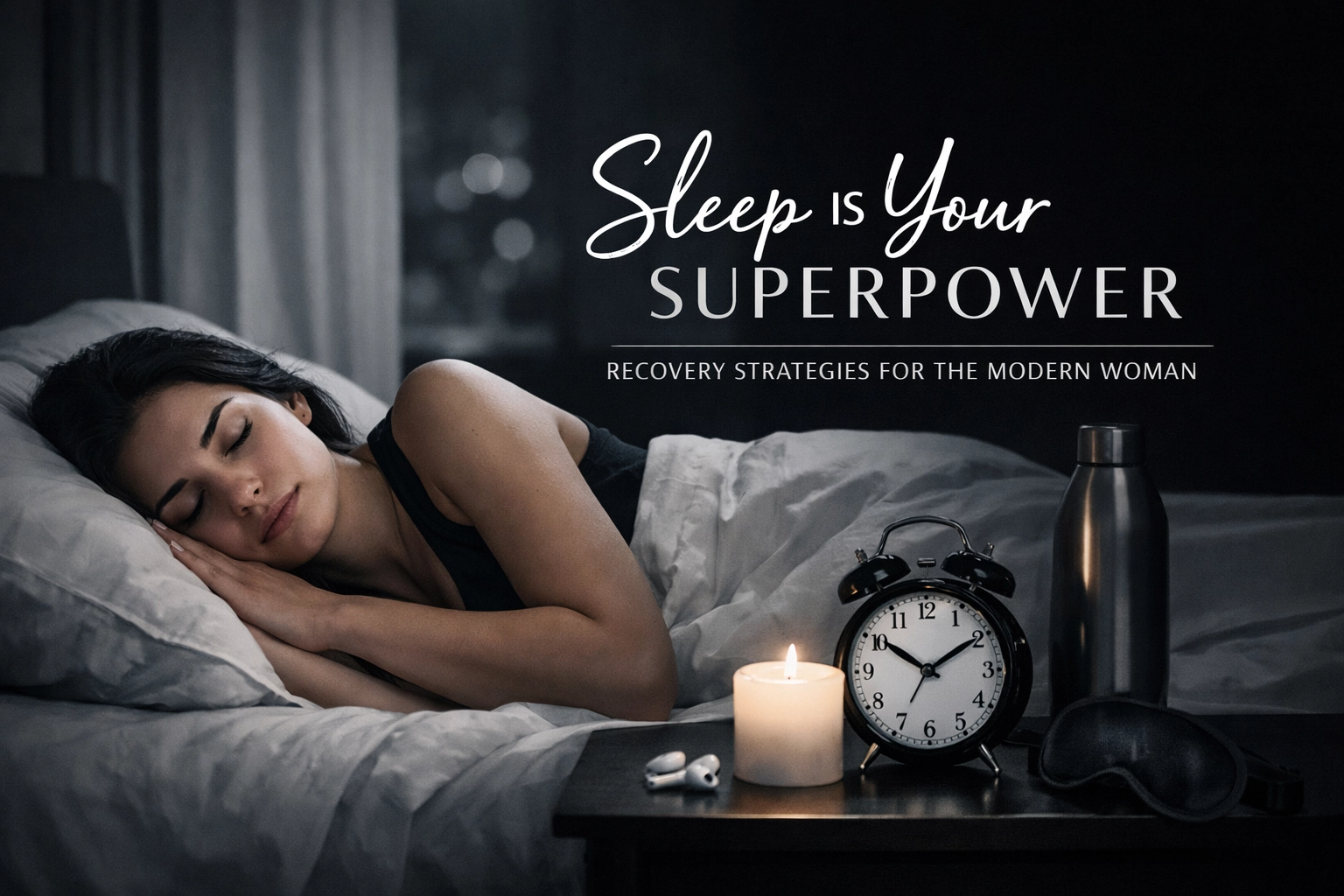
Here’s something most women don’t know: you need approximately 20 minutes more sleep per night than men. Not because you’re lazy: because your brain does more cognitive heavy lifting throughout the day, leading to increased mental fatigue. And if you’re navigating perimenopause or menopause? That sleep debt compounds faster than interest on a credit card you forgot about.
The problem isn’t just falling asleep. It’s staying asleep. It’s waking up feeling like you ran a marathon in your dreams. It’s knowing that despite your best efforts in the gym and kitchen, your body isn’t recovering the way it should.
Fact: Recovery doesn’t happen during your workout. It happens during sleep. Without adequate rest, your efforts toward sustainable fat loss, strength gains, and hormonal balance essentially hit a wall.
Let’s fix that.
Why Hormones Are Hijacking Your Sleep (And What to Do About It)
If you’re over 40 and suddenly finding yourself wide awake at 3 AM, you’re not alone: and you’re not imagining it. Fluctuating estrogen and progesterone levels directly impact your sleep-wake cycle. Progesterone, which has natural sedative properties, declines during perimenopause. Meanwhile, hot flashes can strike at the worst possible moment, jolting you awake in a pool of sweat.
The drop in estrogen also affects your body’s temperature regulation and production of melatonin (your natural sleep hormone). Translation: your body’s internal clock gets thrown off just when you need consistency most.
Track your cycle patterns. Even if your periods are irregular, noting when sleep disturbances occur can help you anticipate and prepare for them. When you know a rough patch is coming, you can be more intentional about your pre-sleep routine and cut yourself some slack if you need an extra recovery day.

The Exercise-Sleep Connection: Timing Is Everything
Here’s the double-edged sword: regular exercise improves sleep quality and helps your body produce melatonin naturally. But intense workouts too close to bedtime can spike cortisol (your stress hormone) and raise core body temperature, making it harder to fall asleep.
Aim for this timing strategy:
- Morning or early afternoon: High-intensity interval training, heavy strength sessions, or anything that gets your heart rate significantly elevated
- Late afternoon (4-6 PM): Moderate cardio or strength training: far enough from bedtime to allow cortisol to settle
- Evening (90+ minutes before bed): Gentle yoga, stretching, walking, or mobility work that signals your body to wind down
Your post-workout nutrition also matters. If you train in the evening, include a small portion of complex carbohydrates in your post-workout meal. Carbs support serotonin production, which converts to melatonin as bedtime approaches.
If you’re working with a personal trainer in Austin (or anywhere), communicate your sleep struggles. A good trainer will adjust your program timing and intensity based on your recovery patterns: especially important for menopause fitness programs where hormonal fluctuations require more nuanced programming.
Master Your Sleep Environment: Temperature, Darkness, and Consistency
Your bedroom should function like a sleep cave, not a multipurpose room. Research consistently shows that optimal sleep occurs in cool environments: typically between 60-67°F. During perimenopause and menopause, when hot flashes disrupt sleep, keeping your room cooler becomes even more critical.
Create your optimal sleep environment:
- Temperature control: Use a fan, open windows, or invest in cooling sheets. Consider keeping a cold pack under your pillow to flip during night sweats.
- Complete darkness: Blackout curtains or a sleep mask block light that suppresses melatonin production. Even small amounts of light from electronics can interfere with sleep quality.
- White noise: A fan, white noise machine, or app can mask disruptive sounds and create consistent audio cues that signal sleep time.
- Reserve your bed for sleep: Your brain creates associations. If you work, scroll social media, or watch TV in bed, your brain stops associating your bedroom with rest.

The 90-Minute Rule: Syncing With Your Natural Sleep Cycles
Your sleep occurs in approximately 90-minute cycles, moving through light sleep, deep sleep, and REM sleep. Waking during deep sleep stages leaves you feeling groggy and disoriented: even if you’ve technically slept enough hours.
Calculate your sleep in 90-minute increments: If you need to wake at 6 AM, count backward in 90-minute blocks. Going to bed at 10:30 PM gives you six complete cycles (9 hours). If that’s not realistic, aim for 12:00 AM (six cycles, 6 hours) rather than 11:15 PM, which would interrupt a cycle mid-stream.
This matters particularly for sustainable fat loss. Interrupted sleep cycles elevate ghrelin (hunger hormone) and decrease leptin (satiety hormone), making you crave high-calorie foods the next day. One night of poor sleep can reduce insulin sensitivity by up to 30%, affecting how your body processes carbohydrates.
Build Your Wind-Down Ritual: The 60-Minute Countdown
Your body doesn’t have an on-off switch. It needs transition time. Create a consistent 60-minute pre-sleep routine that signals your nervous system to shift from “go mode” to “rest mode.”
60 minutes before bed:
- Dim overhead lights and switch to lamps or candles
- Put your phone on Do Not Disturb (blue light suppresses melatonin by up to 50%)
- Set out tomorrow’s workout clothes or prepare your coffee setup: eliminate morning decisions
30 minutes before bed:
- Take a warm bath or shower (the subsequent drop in core body temperature signals sleep)
- Practice 10 minutes of gentle stretching or restorative yoga poses
- Try box breathing: inhale for 4 counts, hold for 4, exhale for 4, hold for 4: repeat for 5 minutes
Final 15 minutes:
- Journal three things from your day and three priorities for tomorrow (brain dump reduces middle-of-the-night racing thoughts)
- Read something physical (not your phone): fiction works better than work-related material
Recovery Is Where the Magic Happens
Every personal trainer worth their certification knows this: you don’t get stronger during workouts. You get stronger during recovery. That’s when muscle protein synthesis occurs, when growth hormone peaks, when cortisol drops, and when your nervous system repairs itself.
Poor sleep doesn’t just make you tired: it actively sabotages your menopause fitness goals:
- Muscle recovery slows: Growth hormone production drops by up to 70% with inadequate sleep
- Fat loss stalls: Sleep deprivation increases cravings for high-calorie foods by 25%
- Injury risk increases: Reaction time and coordination decline with cumulative sleep debt
- Motivation tanks: Executive function and decision-making suffer, making it harder to stick with your program

If you’re investing time and money in concierge personal training, maximize that investment by prioritizing sleep. Your trainer can design the perfect program, but your body can only execute it effectively when properly recovered.
Strategic Nutrition for Better Sleep
What you eat: and when: directly impacts sleep quality. Certain nutrients support the production of sleep-regulating hormones, while others interfere.
Sleep-promoting foods to include regularly:
- Tart cherry juice: Natural melatonin source (consume 4-6 oz about 2 hours before bed)
- Fatty fish: Omega-3s and vitamin D support serotonin production
- Almonds and walnuts: Magnesium helps muscles relax and reduces nighttime leg cramps
- Bananas: Potassium and tryptophan combination promotes natural melatonin production
- Oatmeal: Complex carbs trigger serotonin release without spiking blood sugar
Minimize within 4-6 hours of bedtime:
- Caffeine: Has a half-life of 5-6 hours; that 3 PM coffee is still 50% active at 9 PM
- Alcohol: While it may help you fall asleep initially, it disrupts REM cycles and causes middle-of-the-night waking
- Large meals: Heavy eating close to bedtime increases core body temperature and digestive activity
- Spicy foods: Can trigger hot flashes and acid reflux in some women
When You Have a Rough Night: Damage Control
Even with perfect habits, you’ll have occasional bad nights. How you handle them matters.
If you can’t fall asleep after 20 minutes, get up. Lying awake creates negative associations between your bed and wakefulness. Do something calming in low light: read, stretch gently, journal: then return to bed when drowsy.
The next day, resist the all-day-coffee binge. Limit caffeine to morning hours only. Get outside in natural sunlight within an hour of waking: this resets your circadian rhythm and provides an energy boost without disrupting tonight’s sleep.
Adjust your workout intensity. Skip the HIIT session and opt for a moderate walk or gentle strength training. Pushing hard on inadequate sleep increases injury risk and further elevates stress hormones.
Take a strategic nap if needed: 20 minutes to reduce brain fog, or 90 minutes if you’re seriously sleep-deprived (a full cycle prevents grogginess). Avoid napping after 3 PM, which can interfere with nighttime sleep.
The Invictus Approach: Recovery-First Training
At Invictus Fitness, we build recovery into every program design: especially for women navigating hormonal transitions. Our concierge personal training approach means we adjust workout intensity, timing, and volume based on your sleep quality, stress levels, and where you are in your cycle.
Because here’s the truth: the best workout program in the world won’t deliver results if your body can’t recover from it. Sleep isn’t just “nice to have”: it’s the foundation everything else is built on.
Your recovery strategy is as important as your training strategy. Treat it that way, and watch how quickly your body responds.
Ready to build a fitness program that actually accounts for real life: including the sleep challenges that come with it? Let’s talk about how personalized training can work with your body’s needs, not against them.
Because sustainable results don’t come from pushing harder. They come from recovering smarter.