
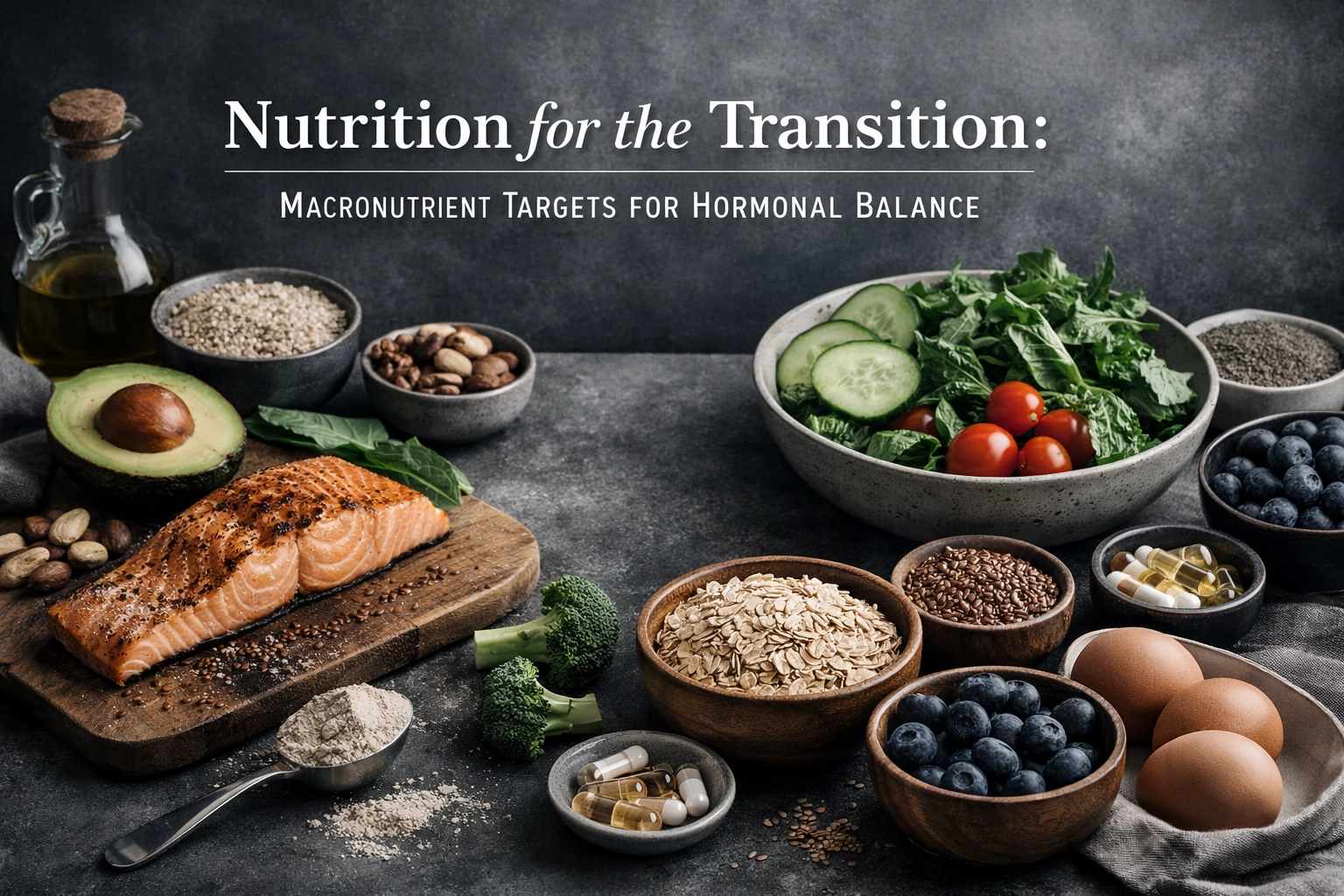
Your body doesn’t respond to food the way it used to: and it’s not in your head. During perimenopause and menopause, declining estrogen levels trigger metabolic shifts that fundamentally change how your body processes nutrients, stores fat, and regulates energy. Research shows that women can experience a hormonal balance, a 2-5% decrease in metabolic rate during this transition, making the same eating patterns that worked in your 30s suddenly ineffective in your 40s and beyond.
The solution isn’t eating less. It’s eating smarter with macronutrient targets specifically calibrated for hormonal balance during this life stage.
Why Your Macro Targets Need to Shift Now
Fact: Women in perimenopause experience increased insulin resistance: even without weight gain: making blood sugar management more challenging than ever before.
Here’s what’s happening metabolically during the transition:
- Declining estrogen disrupts insulin sensitivity, causing your cells to become less responsive to this hormone that regulates blood sugar
- Loss of muscle mass accelerates (approximately 3-8% per decade after age 40), further reducing metabolic rate
- Cortisol sensitivity increases, making stress-related weight gain more pronounced, particularly around the midsection
- Thyroid function may slow, impacting how efficiently your body burns calories
These changes require a strategic recalibration of your macronutrient ratios: not the generic 45-65% carbohydrates, 10-35% protein, and 20-35% fat that standard nutrition guidelines recommend. For sustainable fat loss and hormonal balance during menopause, your targets need personalization.

The Protein Priority: Your Non-Negotiable Foundation
Protein becomes your most powerful ally during the menopausal transition. Here’s why the standard recommendation of 0.8g per kilogram of body weight is insufficient for women over 40:
Your body cannot synthesize hormones without adequate protein. Amino acids: protein’s building blocks: are the raw materials from which your thyroid hormones, growth hormones, and neurotransmitters are created. Without them, hormonal balance is physiologically impossible.
Target: 1.2-1.6g of protein per kilogram of body weight daily
For a 150-pound woman, this translates to approximately 80-110g of protein daily: significantly higher than conventional recommendations. This elevated target serves multiple critical functions:
Muscle preservation and metabolic protection. Higher protein intake counteracts the accelerated muscle loss that occurs during menopause. Since muscle tissue burns more calories at rest than fat tissue, maintaining lean mass is essential for preventing metabolic decline.
Enhanced satiety and blood sugar stability. Protein has the highest thermic effect of all macronutrients (meaning your body burns more calories digesting it) and slows glucose absorption, helping manage the insulin resistance that accompanies declining estrogen.
Direct hormone synthesis support. The amino acid tyrosine is crucial for thyroid hormone production, while tryptophan supports serotonin synthesis: directly impacting mood, sleep quality, and appetite regulation.
Quality Sources to Include at Every Meal:
- Wild-caught fish (salmon, mackerel, sardines)
- Pasture-raised poultry and eggs
- Grass-fed lean meats
- Greek yogurt and cottage cheese
- Legumes and lentils
- Quinoa and ancient grains
- Nuts, seeds, and nut butters
Distribute protein evenly across meals rather than loading it at dinner. Aim for 25-35g per meal to optimize muscle protein synthesis throughout the day.
Strategic Fat Intake: Rebuilding Hormone Production
Despite decades of fat-phobic diet culture, healthy fats are absolutely essential for hormonal health during menopause: and you likely need more than you’re currently eating.
Here’s the critical connection: Cholesterol is the direct precursor to steroid hormones, including estrogen, progesterone, testosterone, and cortisol. When you restrict fat intake too severely, you literally deprive your body of the raw materials needed to produce these hormones.

Target: 25-35% of total calories from healthy fats
Focus on these hormone-supportive fat sources:
Omega-3 fatty acids from wild-caught fish, flaxseeds, chia seeds, and walnuts reduce inflammation and support production of leptin (your satiety hormone) and insulin sensitivity. Research consistently shows that women with higher omega-3 intake experience fewer hot flashes and better mood stability during menopause.
Monounsaturated fats from extra virgin olive oil, avocados, and almonds support cardiovascular health: increasingly important as estrogen’s protective effects on heart health decline.
Fat-soluble vitamin carriers. Vitamins A, D, E, and K require dietary fat for absorption, and these vitamins are critical for bone health, immune function, and hormonal regulation during the menopausal transition.
What to minimize: While some fat is essential, keep omega-6 fatty acids (from processed vegetable oils, fried foods, and packaged snacks) moderate to maintain optimal inflammation balance. The typical American diet provides a 15:1 ratio of omega-6 to omega-3 fats; aim for closer to 4:1 for hormonal optimization.
Carbohydrates and Insulin Sensitivity: Getting Strategic
Carbohydrates aren’t the enemy: but your relationship with them needs strategic refinement during perimenopause and menopause fitness journeys.
The insulin resistance challenge: As estrogen declines, your cells become less responsive to insulin, meaning the same amount of carbohydrates that once served as clean-burning fuel now more readily converts to stored fat: particularly visceral fat around the abdomen.
Target: 35-45% of total calories from complex carbohydrates
This represents a moderate reduction from standard recommendations, with emphasis on timing and quality:
Prioritize fiber-rich complex carbohydrates that slow glucose absorption and stabilize blood sugar. Aim for 25-30g of fiber daily through:
- Colorful non-starchy vegetables (leafy greens, cruciferous vegetables, peppers, tomatoes)
- Berries and lower-glycemic fruits
- Steel-cut oats and quinoa
- Legumes, beans, and lentils
- Nuts and seeds
Time carbohydrate intake strategically. Consider concentrating higher-carbohydrate meals around workout sessions when insulin sensitivity is naturally elevated and glucose is more efficiently utilized for muscle recovery rather than fat storage.
Minimize refined carbohydrates and added sugars, which create blood sugar spikes that exacerbate insulin resistance, trigger inflammatory responses, and worsen hot flashes and energy crashes.

The Supporting Players: Micronutrients and Gut Health
While macronutrients form your nutritional foundation, micronutrients and gut health complete the hormonal balance picture.
Eat the rainbow. Colorful vegetables and fruits provide vitamins and minerals that serve as cofactors in hormonal processes. Vitamin C supports cortisol production and blood sugar metabolism. B vitamins facilitate energy production and neurotransmitter synthesis. Magnesium regulates over 300 enzymatic reactions, including those involved in blood sugar control and stress response.
Prioritize gut health through fermented foods. Research increasingly shows a direct connection between gut microbiome diversity and sex hormone regulation. Include probiotic-rich foods like Greek yogurt, kefir, kimchi, sauerkraut, and kombucha regularly. A healthy gut microbiome supports estrogen metabolism and may reduce menopause symptoms.
Practical Implementation: Your Week-One Action Plan
Overhauling your entire eating pattern overnight creates overwhelm. Instead, implement these changes progressively:
Week 1: Audit your current protein intake. Track meals for three days and calculate your average daily protein. If you’re below 80g daily, add one high-protein food to each meal.
Week 2: Upgrade your fat sources. Replace vegetable oils with extra virgin olive oil, add avocado to lunch, include a handful of nuts as your afternoon snack.
Week 3: Increase fiber gradually. Add one additional serving of vegetables to dinner, swap white rice for quinoa, choose berries over higher-sugar fruits.
Week 4: Introduce gut-supporting foods. Add Greek yogurt or kefir to breakfast, try fermented vegetables as a side dish.
The Invictus Approach to Personalized Nutrition
While these macronutrient targets provide evidence-based starting points, sustainable fat loss during menopause requires customization: not cookie-cutter meal plans.
At Invictus Fitness, nutrition guidance is integrated into every client’s in-home transformation program. Your personal trainer Austin trusts doesn’t just count reps: they work with you to calibrate your nutrition strategy based on your metabolic response, activity level, stress patterns, and hormonal symptoms.
We provide:
- Personalized macronutrient calculations based on your body composition, metabolic rate, and goals
- Meal timing strategies aligned with your workout schedule and daily routine
- Real-time adjustments as your body responds and your needs evolve through the transition
- Accountability without judgment: because changing longstanding eating patterns requires support
Your body is navigating a significant biological transition. The nutrition strategy that serves you now isn’t about restriction or deprivation: it’s about providing precisely what your changing physiology needs to thrive. When macronutrient targets align with hormonal realities, sustainable fat loss becomes achievable, energy stabilizes, and you reclaim the vitality that perimenopause threatened to steal.
The transition doesn’t have to mean decline. With the right nutritional foundation, it can mean evolution into your strongest, most capable self yet.