
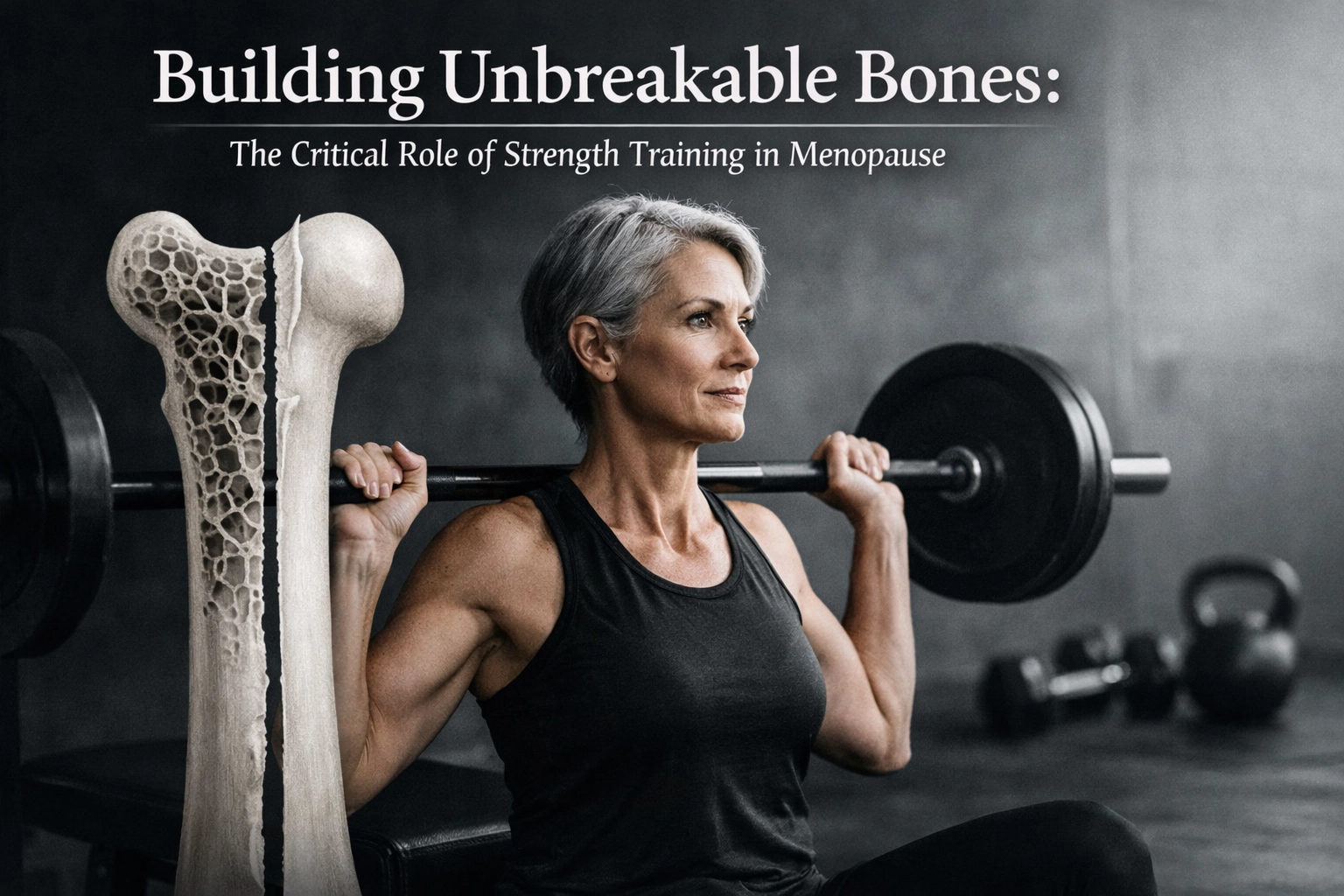
Here’s something most Austin women don’t realize until it’s too late: your bones are quietly losing density right now. If you’re over 40 and approaching or experiencing menopause, you’re losing 1-2% of your bone mass every single year. Without intervention, that silent decline sets the stage for fractures, falls, and a restricted quality of life down the road.
But here’s the good news: strength training is the single most effective tool for reversing this trend. Not calcium supplements alone. Not cardio. Not yoga (though it has other benefits). Heavy, progressive resistance training actually stimulates your bones to rebuild themselves, creating lasting protection against osteoporosis.
Let’s break down exactly how this works and what you need to do about it.
Why Menopause Puts Your Bones at Risk
When estrogen levels drop during menopause, your body loses one of its primary bone-protecting hormones. Estrogen directly regulates the cells that build and maintain bone tissue (osteoblasts). Without adequate estrogen, bone breakdown outpaces bone formation: and the result is accelerated bone loss that significantly increases your fracture risk.
Fact: One in four adults over 65 experiences a fall each year, and weakened bones from unchecked osteoporosis turn those falls into life-altering fractures.
The loss isn’t gradual: it’s concentrated. Women can lose up to 20% of their bone density in the 5-7 years following menopause, with the most significant losses occurring in the spine and hips (the exact areas most vulnerable to debilitating fractures).
If you’re in Austin and noticing changes: unexplained back pain, a shrinking height, or simply approaching your late 40s or 50s: your bones need attention now, not later.

How Strength Training Actually Rebuilds Bone Density
Here’s the science that changes everything: bones respond to mechanical stress by getting stronger. When you lift heavy weights or perform high-resistance exercises, you’re applying targeted force to your skeletal system. That stress triggers a biological response: your bones activate osteoblasts (bone-building cells) to lay down new bone tissue in response to the load.
Think of it this way: bones are living tissue that adapt to the demands you place on them. Lift consistently heavy loads, and your bones respond by becoming denser and more resilient. Avoid resistance training, and they quietly weaken.
The Research That Proves It
A 2015 study tracked postmenopausal women who performed moderate to high-load resistance training for six months. The results? An average bone mineral density increase of 1.82% in the lumbar spine, while the control group (who didn’t strength train) showed little to no improvement. That’s not just maintenance: that’s reversal of bone loss.
Even better: research confirms that strength training effectiveness doesn’t depend on whether you’re in early or late menopause, or whether you’re working with a trainer or exercising independently. The key is consistency and progressive overload (gradually increasing the weight or resistance over time).
What Types of Training Work Best?
Not all exercise is created equal for bone health after 50. Here’s what actually moves the needle:
- High-intensity resistance training: Lifting weights at 70-80% of your max capacity for lower repetitions (6-10 reps)
- Progressive overload protocols: Continuously challenging your muscles with heavier loads as you adapt
- Compound movements: Squats, deadlifts, presses, and rows that engage multiple muscle groups and bones simultaneously
- High-impact activities (if appropriate): Jump training and plyometrics for women without existing osteoporosis
If you already have diagnosed osteoporosis, moderate-intensity weight-bearing exercises are safer than high-impact activities due to fracture risk. Work with a qualified personal trainer in Austin who understands the specific modifications needed for your condition.

Beyond Bone Strength: The Multiplier Effect
While preventing osteoporosis is reason enough to strength train, the benefits compound across multiple systems: especially during menopause when your body is undergoing significant metabolic shifts.
1. Muscle Preservation and Lean Muscle Development
Age-related muscle loss (sarcopenia) accelerates after menopause. You naturally lose 3-8% of muscle mass per decade after 30, with losses increasing after 50. Strength training directly counteracts this decline, helping you maintain functional strength, metabolic rate, and independence well into your later years.
2. Metabolic Support
Lean muscle tissue burns more calories at rest than fat tissue. By building and maintaining muscle through resistance training, you increase your resting metabolic rate: offsetting the metabolic slowdown that contributes to menopausal weight gain. This is especially relevant for Austin women balancing demanding careers and limited time for lengthy cardio sessions.
3. Fall Prevention
Strong bones matter less if you’re frequently falling. Strength training improves balance, coordination, joint stability, and proprioception (your body’s awareness in space): all critical factors in preventing the falls that lead to fractures in the first place.
4. Mental Health and Energy
Research consistently shows that resistance training enhances mood, reduces anxiety and depression symptoms, and increases energy levels. During menopause, when fatigue and mood swings are common, these mental health benefits become just as valuable as the physical ones.
What Actually Works: Your Practical Bone-Building Strategy
You don’t need to spend hours in the gym or become a powerlifter. Here’s what effective, sustainable bone health training looks like for Austin women navigating menopause:
Start Where You Are
If you’re new to strength training, begin with bodyweight exercises to build foundational strength and proper movement patterns:
- Bodyweight squats
- Wall push-ups progressing to floor push-ups
- Glute bridges
- Step-ups
- Planks
Progress to external resistance once you’ve mastered these movements with proper form.
Target Twice-Weekly Sessions
Aim for at least two resistance training sessions per week, targeting all major muscle groups. This frequency has been shown in research to produce measurable improvements in bone mineral density over 6-12 months.
Each session should include:
- 10-15 repetitions per exercise (for beginners)
- 3-4 sets per exercise
- Rest periods of 60-90 seconds between sets
- Progressive increases in weight or resistance every 2-3 weeks
Focus on Key Movement Patterns
Prioritize exercises that load the spine and hips: the areas most vulnerable to osteoporotic fractures:
- Squats (bodyweight, goblet, back squat variations)
- Deadlifts (trap bar, Romanian, conventional)
- Lunges and split squats
- Overhead presses
- Rows (bent-over, single-arm, cable)
These compound movements create the mechanical stress that stimulates bone formation in critical areas.

Increase Intensity Gradually
Start conservatively, even if you’re eager for results. You can begin with as little as 10 pounds for upper body exercises and 20-30 pounds for lower body movements. Focus on perfect form before adding weight. Poor technique under load increases injury risk without delivering bone-building benefits.
As you adapt (typically every 2-3 weeks), increase the weight by 5-10% or add an additional set. This progressive overload is what signals your bones to keep strengthening.
The Long-Term Picture: Aging Well in Austin
Here’s the reality: the strength training you do today determines your quality of life in 20-30 years. The difference between a woman who consistently strength trains through menopause and one who doesn’t becomes starkly apparent by age 70 and beyond.
Women who prioritize resistance training maintain:
- Independence in daily activities (carrying groceries, climbing stairs, playing with grandchildren)
- Lower fracture risk even if falls occur
- Better posture and reduced chronic back pain
- Higher metabolic rates and healthier body composition
- Greater confidence and mental resilience
The Austin women we work with at Invictus Fitness consistently report that strength training transforms not just their bodies, but their entire relationship with aging. Instead of accepting decline as inevitable, they’re building resilient, capable bodies that support active, fulfilling lives.
Your Next Step
If you’re ready to protect your bones and build lasting strength through menopause, start with an honest assessment: Are you currently performing resistance training at least twice per week with progressive overload? If not, that’s your starting point.
For personalized guidance on safe, effective strength training tailored to your specific stage of menopause and fitness level, consider working with a qualified personal trainer who understands the unique needs of women over 40. At Invictus Fitness, we specialize in helping Austin women navigate menopause fitness with science-backed programming that delivers real results.
Your bones are responding to what you do (or don’t do) today. Make strength training non-negotiable, and you’ll build the foundation for decades of vibrant, active living.