
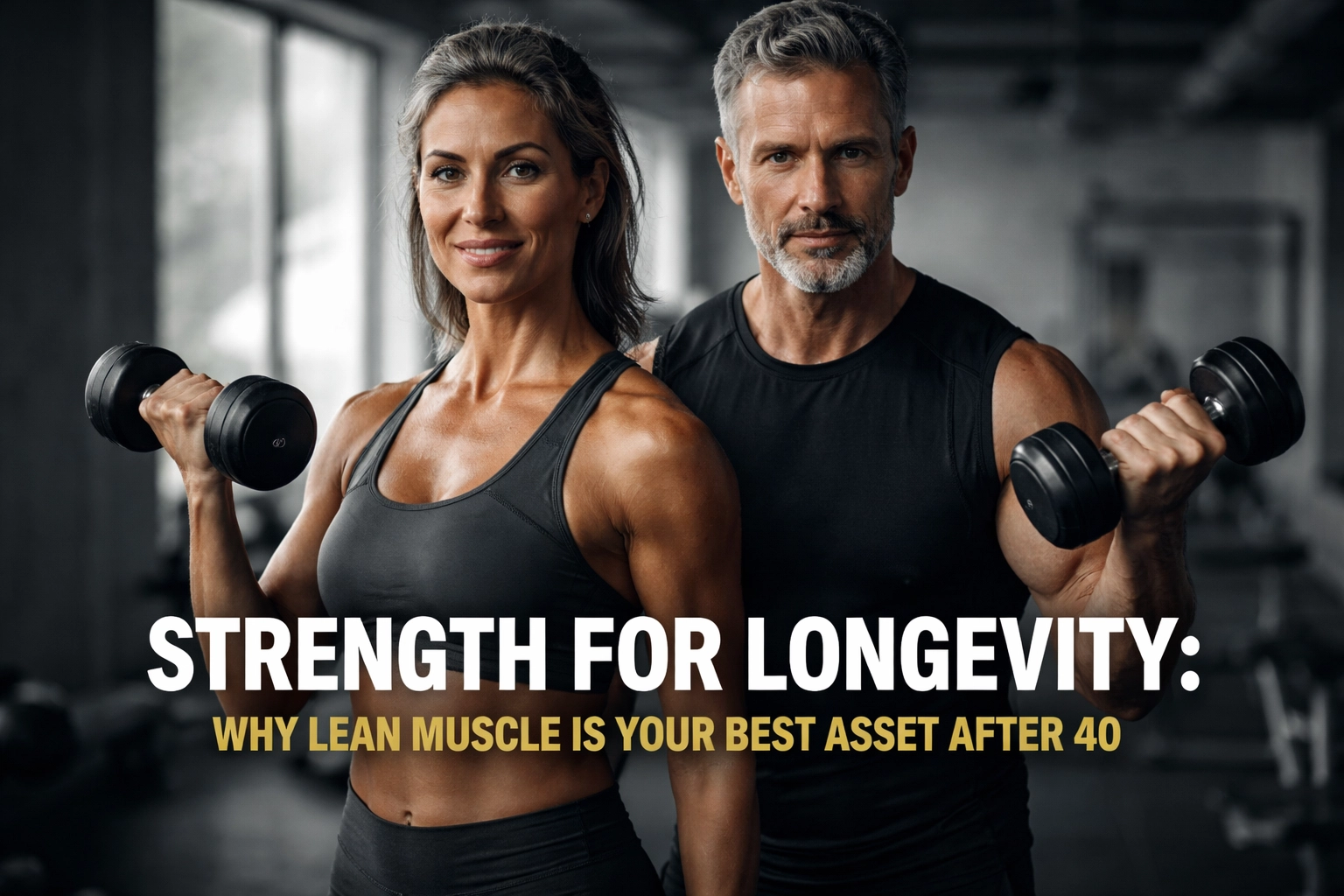
You’ve built a successful career, raised a family, or maybe you’re finally finding time to prioritize yourself. But here’s something your doctor may not have emphasized enough: after 40, your body starts quietly losing one of its most valuable assets: lean muscle.
Without intervention, adults lose approximately 8% of their muscle mass per decade starting in their 40s. By your 60s, that loss accelerates even further. This isn’t just about aesthetics or fitting into your favorite jeans. This is about how well you’ll move, think, and live for the next several decades.
The good news? Lean muscle development isn’t just possible after 40: it’s one of the most powerful investments you can make in your longevity. And you don’t need to spend hours in the gym to see meaningful results.
The Silent Crisis: Why Muscle Loss Accelerates After 40
The process has a clinical name: sarcopenia: but its effects are anything but clinical. They show up in everyday life: struggling with heavy grocery bags, feeling winded on stairs, recovering slower from minor injuries, and noticing your metabolism isn’t what it used to be.
Several biological factors drive this decline:
- Hormonal shifts: Testosterone, growth hormone, and estrogen naturally decrease with age, making muscle maintenance harder
- Anabolic resistance: Your body becomes less efficient at converting protein into muscle tissue
- Reduced activity levels: Career demands and lifestyle changes often mean less movement
- Chronic inflammation: Low-grade inflammation increases with age, interfering with muscle repair
Fact: Muscle loss isn’t just about weakness: it’s interconnected with bone density decline, slower metabolism, impaired glucose control, poor balance, and even cognitive deterioration.
The cascade effect is real. But so is your ability to reverse it.

The Mortality Advantage: What the Research Actually Shows
Here’s where the conversation shifts from vanity to survival.
Adults who incorporate regular resistance training experience a 20–30% reduction in all-cause mortality compared to those who skip strength work entirely. When you combine strength training with cardiovascular exercise, the protective effects compound even further.
This isn’t fringe science. Multiple large-scale studies confirm that maintaining lean muscle mass correlates with:
- Lower risk of cardiovascular disease
- Reduced cancer mortality
- Better metabolic health markers
- Improved recovery from illness and surgery
For Austin professionals navigating high-stress careers while trying to age gracefully, this data should be impossible to ignore. Your muscle tissue isn’t just functional: it’s fundamentally protective.
5 Critical Benefits of Building Lean Muscle After 40
1. Stronger Bones and Fracture Prevention
Resistance training doesn’t just build muscle: it signals your bones to become denser and more resilient. This is particularly crucial for bone health after 50, when osteoporosis risk climbs significantly, especially for women navigating menopause.
Fact: Even men in their 60s and 70s can achieve meaningful improvements in bone mineral density through consistent strength training.
The mechanism is straightforward: when muscles pull against bones during resistance exercises, it stimulates bone-building cells called osteoblasts. Stronger bones mean fewer fractures, faster recovery, and maintained independence as you age.
2. Metabolic Resilience and Better Blood Sugar Control
Muscle tissue is your body’s primary site for glucose disposal. The more lean muscle you carry, the better your insulin sensitivity and the more efficiently you manage blood sugar throughout the day.
This translates to:
- Higher resting metabolic rate (burning more calories even while sitting)
- Reduced risk of type 2 diabetes
- Easier weight management without extreme dieting
- More stable energy levels
For busy Austin executives already battling the metabolic effects of stress and irregular schedules, building lean muscle creates a metabolic buffer that supports sustainable fat loss without the yo-yo effect.

3. Hormonal Optimization
While you can’t fully reverse age-related hormonal decline, strength training helps your body remain more responsive to the hormones you do produce. Regular resistance training also triggers the release of endorphins: improving mood, sleep quality, and stress resilience.
What this means practically:
- Better sleep architecture and recovery
- Improved stress management (crucial for high-performers)
- Enhanced mood stability
- Reduced symptoms of hormonal transition (perimenopause, andropause)
4. Functional Independence for Decades
This benefit often gets overlooked until it’s too late. Stronger muscles mean easier daily activities: climbing stairs, lifting luggage, playing with grandchildren, maintaining your home, traveling comfortably.
The adults who maintain their muscle mass into their 70s and 80s are the ones still living on their own terms: traveling, staying active, and avoiding the assisted living facilities that become inevitable when strength disappears.
5. Brain Health and Cognitive Protection
The connection between muscle and mind is stronger than most people realize. Strength training improves:
- Sleep quality (critical for memory consolidation)
- Blood flow to the brain
- Inflammatory markers associated with cognitive decline
- Blood sugar stability (glucose dysregulation is linked to dementia risk)
Building lean muscle isn’t just about your body: it’s about protecting your mind for the long haul.
It’s Never Too Late: The Science of Muscle at Any Age
Here’s the most encouraging research finding: your body retains the ability to build muscle well into your 50s, 60s, and beyond. Older adults can achieve muscle growth rates comparable to younger people when following proper training and nutrition protocols.

In fact, beginners over 40 often experience rapid improvements in their first 6–12 months of consistent training: sometimes faster than they would have in their 20s, simply because they’re starting from a less-trained baseline.
Fact: Just 2–3 sessions per week of intelligent, progressive strength training is sufficient to preserve and rebuild muscle, improve bone density, boost metabolism, and maintain functional independence.
You don’t need to live in the gym. You need to train smart.
How to Start: Practical Steps for Lean Muscle Development After 40
Prioritize Compound Movements
Focus on exercises that work multiple muscle groups simultaneously: squats, deadlifts, rows, presses, and lunges. These movements deliver the most hormonal and metabolic benefit per minute invested.
Progress Gradually
Your connective tissues (tendons, ligaments) need time to adapt alongside your muscles. Increase weights by 5–10% when exercises feel comfortable, not before. Patience prevents injury.
Fuel Your Training
Protein requirements increase with age due to anabolic resistance. Aim for approximately 0.7–1 gram of protein per pound of body weight daily, spread across multiple meals. This supports both muscle building and recovery.
Prioritize Recovery
Sleep, stress management, and adequate rest between sessions become more important after 40, not less. Your body builds muscle during recovery: not during the workout itself.
Work With Expertise
The difference between effective and ineffective training often comes down to programming and form. Working with experienced personal trainers in Austin, TX who understand the unique considerations of training adults 40+ can dramatically accelerate your results while minimizing injury risk.
Your Next Chapter Starts Now
The narrative around aging often focuses on decline: what you’re losing, what you can no longer do. But lean muscle development tells a different story. It’s a story about reclaiming capability, building resilience, and investing in decades of vibrant living.
Whether you’re 42 or 62, your body is ready to respond to the right stimulus. The question isn’t whether you can build muscle after 40. The research confirms you absolutely can.
The question is whether you’ll start.
At Invictus Fitness, we specialize in helping Austin’s driven professionals build sustainable strength: on their schedule, with programming designed for real life. Because your best years aren’t behind you. They’re being built right now, one rep at a time.
Ready to Start Your Journey?
The difference between another failed diet attempt and lasting transformation lies in the approach. You need a system designed for your reality: demanding schedule, high stress, and ambitious goals.
Invictus Fitness’s in-home transformation program brings the concierge experience directly to you, eliminating commute times and scheduling conflicts while providing the personalized attention you need to succeed.
Stop trying to fit your life into someone else’s program. Let us create a fat loss strategy that fits your life instead.
Contact Invictus Fitness to begin your journey toward sustainable, convenient fitness that supports your success both in and out of the office.