
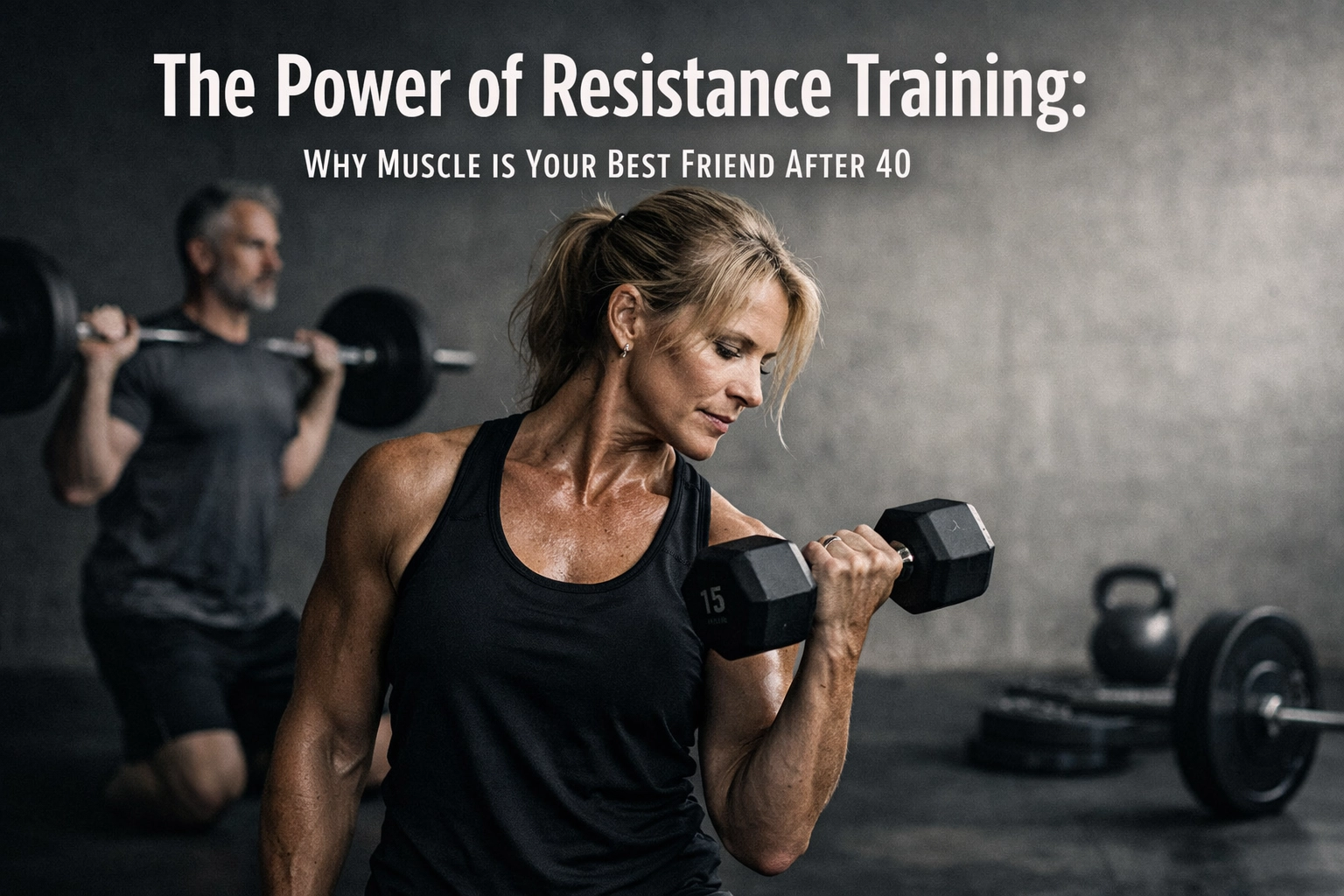
Here’s a truth most women don’t hear until it’s already happening: you lose approximately 3-5% of your muscle mass per decade starting in your 30s. By the time you reach 50, that loss accelerates. Without intervention, you could lose up to 30% of your muscle mass between ages 50 and 70.
This isn’t just about aesthetics. Muscle loss: clinically known as sarcopenia: directly impacts your metabolism, bone density, energy levels, and independence. The good news? Resistance training is the single most powerful tool you have to reverse this decline, and it’s never too late to start.
What Actually Happens to Your Muscles After 40
Sarcopenia doesn’t announce itself with fanfare. It shows up as subtle changes: jeans that fit differently despite no weight gain, fatigue that lingers longer, difficulty opening jars or carrying groceries. These aren’t signs of inevitable aging: they’re signals that your body needs a different fitness approach.
Fact: Research shows that adults who don’t actively resistance train lose an average of 3-8% of their muscle mass per decade after age 30, with losses accelerating after 60.

The culprits behind muscle loss include declining hormone levels (particularly estrogen and testosterone during perimenopause), reduced protein synthesis efficiency, and decreased physical activity. For high-performing women juggling careers, families, and responsibilities, muscle loss compounds the stress your body already manages daily.
But here’s the critical part: muscle loss is not inevitable. With targeted resistance training and proper nutrition, women in their 40s, 50s, and beyond can build significant lean muscle mass: often more effectively than they did in their 20s because they’re training with intention rather than guesswork.
Why Resistance Training Is Non-Negotiable for Women Over 40
1. Metabolic Protection and Weight Management
Muscle tissue is metabolically active: it burns calories even at rest. Every pound of lean muscle you maintain or build supports your basal metabolic rate (BMR), which naturally declines with age.
Here’s the math: Each pound of muscle burns approximately 6-10 calories per day at rest, while fat tissue burns only 2-3 calories. When you lose 10 pounds of muscle over a decade (a conservative estimate without resistance training), your metabolism decreases by 60-100 calories daily. That’s 21,900-36,500 fewer calories burned per year: equivalent to 6-10 pounds of potential fat gain annually, even if your eating habits don’t change.
Resistance training reverses this equation. Studies demonstrate that women who engage in consistent strength training maintain higher insulin sensitivity, better blood sugar regulation, and more stable energy throughout the day: all critical factors for managing weight during hormonal transitions.
2. Bone Density Protection
Fact: Women lose up to 20% of their bone density in the five to seven years following menopause due to declining estrogen levels.

Resistance training: particularly progressive loading of the hips, spine, and legs: is the strongest non-pharmaceutical intervention for protecting bone health. When you load your skeleton through controlled movement (squats, deadlifts, lunges, overhead presses), you create mechanical stress that signals your body to maintain and even build bone density.
This isn’t theoretical. Research consistently shows that postmenopausal women who strength train 2-3 times weekly increase bone mineral density in the hip and spine by 1-3% annually, while sedentary women lose 1-2% during the same period. That 2-5% annual difference compounds dramatically over a decade.
For women working with an in-home personal trainer in Austin, this bone-protective training happens in your space, on your schedule: no commute, no equipment barriers, just results.
3. Disease Prevention and Longevity
The research here is striking: combining resistance training with aerobic exercise reduces all-cause mortality by 29%, compared to 16% for aerobic exercise alone. Studies have found strength training more effective than cardio at reducing cancer risk and extending healthspan: the number of years you live with vitality and independence.
Lean muscle development also protects against:
- Type 2 diabetes (improved glucose metabolism and insulin sensitivity)
- Cardiovascular disease (reduced blood pressure and improved lipid profiles)
- Cognitive decline (enhanced brain-derived neurotrophic factor production)
- Falls and fractures (improved balance, coordination, and bone strength)
4. Hormonal Balance and Mental Resilience
Resistance training influences the same hormonal systems that perimenopause and menopause disrupt. Regular strength training has been shown to:
- Reduce cortisol (the stress hormone) levels and improve stress tolerance
- Increase endorphins and support mental health
- Stabilize mood and reduce anxiety symptoms common during hormonal transitions
- Improve sleep quality and recovery capacity
- Support healthy libido and sexual function
A stronger body handles both physical and psychological stress more efficiently. For executive women and professionals managing high-stakes responsibilities, this translates to better decision-making, sustained energy, and improved quality of life.
The Right Way to Build Muscle After 40
You can absolutely build significant lean mass in your 40s, 50s, and beyond: but the approach needs to match your physiology.

Prioritize Progressive Overload
Start with movements you can control with excellent form, then gradually increase resistance, volume, or complexity. This might mean beginning with bodyweight exercises, resistance bands, or lighter weights before progressing to heavier loads. The key is consistent challenge over time, not heroic one-time efforts.
Target Compound Movements
Focus on exercises that work multiple muscle groups simultaneously:
- Squats and variations (goblet squats, split squats, Bulgarian split squats)
- Deadlifts and hip hinges (Romanian deadlifts, single-leg deadlifts)
- Push patterns (push-ups, chest presses, overhead presses)
- Pull patterns (rows, pull-downs, assisted pull-ups)
- Core-integrated movements (planks, dead bugs, pallof presses)
These movements build functional strength that translates directly to daily life: carrying groceries, lifting luggage, playing with grandchildren, maintaining independence.
Aim for 2-4 Sessions Weekly
Research shows optimal muscle and bone benefits occur with 2-3 resistance training sessions per week, allowing 48-72 hours between sessions targeting the same muscle groups. For busy professionals, this is remarkably achievable: especially when training happens at home or in your office with a specialized personal trainer in Austin.
Support Training with Adequate Protein
Target 0.7-1.0 grams of protein per pound of body weight daily, distributed across meals. Protein synthesis efficiency decreases with age, making consistent intake throughout the day critical for muscle maintenance and growth.
Manage Recovery Intelligently
Recovery takes slightly longer after 40. Include mobility work, prioritize 7-9 hours of sleep, manage stress actively, and listen to your body’s signals. Soreness is normal; pain is not.
Why the Concierge Advantage Matters for Menopause Fitness
The research is clear: resistance training protects and builds muscle after 40. But knowledge isn’t the barrier: implementation is.
This is where specialized in-home personal training becomes transformative. When your trainer comes to your space with equipment, programming expertise, and understanding of perimenopause and menopause physiology, you eliminate every common barrier:
- No commute or gym intimidation
- No equipment learning curve
- No guesswork about form or progression
- Complete privacy and personalized attention
- Scheduling that adapts to your demanding calendar
For high-performing women in Austin navigating hormonal transitions while managing careers and responsibilities, this approach isn’t luxury: it’s strategic efficiency. You’re not just buying convenience; you’re investing in expert guidance designed specifically for your life stage and goals.
Your Next Step
Every day you delay resistance training, you lose ground in the battle against sarcopenia, declining bone density, and metabolic slowdown. But every session you complete: even starting today: begins reversing these changes.
You don’t need to become a powerlifter or spend hours in a gym. You need consistent, progressive, expertly programmed resistance training that respects your schedule and supports your goals. That’s exactly what Invictus Fitness delivers to high-performing women throughout Austin.
Your muscle is your most powerful ally in this next chapter. It’s time to treat it that way.