
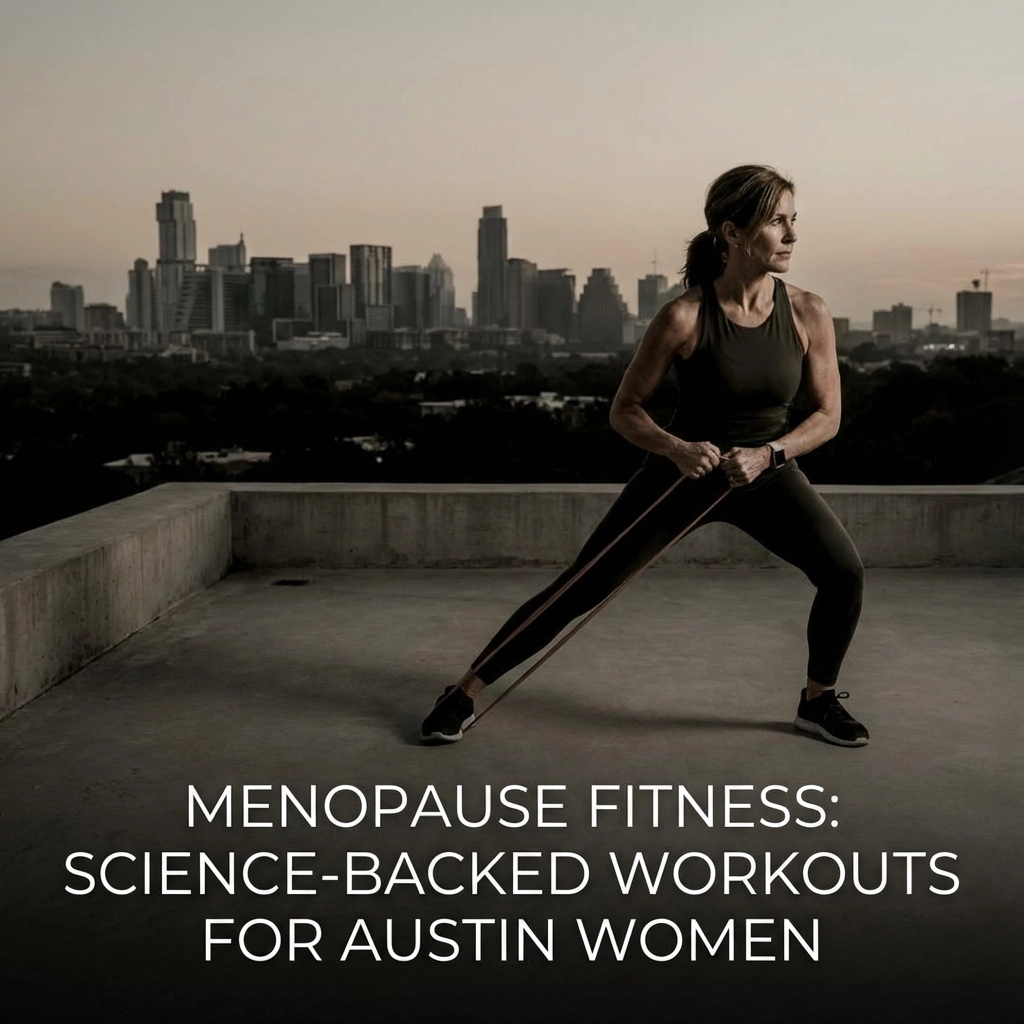
Fact: Women lose 3-8% of their muscle mass per decade after age 30, with accelerated loss during menopause due to declining estrogen levels.
If you’re navigating menopause in Austin, you’ve likely discovered that your pre-menopause fitness routine isn’t delivering the same results. The truth is, your body’s hormonal landscape has fundamentally changed, and your workout approach needs to evolve accordingly. Research shows that 67% of menopausal women experience weight gain, decreased energy, and loss of muscle tone: but science-backed fitness strategies can reverse these trends.
Why Generic Workouts Fail During Menopause
During perimenopause and menopause, declining estrogen levels trigger a cascade of physiological changes that render traditional fitness approaches ineffective. Your metabolism slows by approximately 15%, muscle protein synthesis decreases, and your body preferentially stores fat around your midsection.
The hormonal reality: Estrogen directly influences how your muscles respond to exercise. Without adequate estrogen, your recovery time increases, your strength gains plateau faster, and steady-state cardio becomes less effective for fat loss. This explains why your former spinning obsession or daily jogging routine suddenly feels counterproductive.

You need workouts designed specifically for your current hormonal profile: not the fitness advice created for 25-year-old bodies or general population studies that exclude menopausal women.
Science-Backed Exercise Strategies That Work
Progressive Strength Training: Your Metabolic Game-Changer
Research published in the Journal of Clinical Medicine demonstrates that resistance training increases lean muscle mass by 12-15% in postmenopausal women within 6 months. More importantly, each pound of muscle you build burns an additional 6-10 calories per day at rest.
Your implementation strategy:
- Target 2-3 strength sessions weekly, focusing on compound movements
- Progressively increase weight, reps, or sets every 1-2 weeks
- Prioritize exercises that work multiple muscle groups (squats, deadlifts, rows)
- Allow 48-72 hours between training the same muscle groups
Fact: Women who perform consistent strength training during menopause maintain 85% more bone density than sedentary peers.
High-Intensity Interval Training (HIIT): Hormone Optimization
HIIT triggers beneficial hormonal responses that help counteract menopausal metabolic changes. Studies show 20-minute HIIT sessions can increase growth hormone production by up to 400% and improve insulin sensitivity by 23% in postmenopausal women.
Your HIIT framework:
- Perform 15-25 minute sessions 2-3 times weekly
- Work at 85-95% maximum effort during intervals
- Rest completely between high-intensity bursts
- Combine with strength training rather than replacing it

Zone 2 Cardio: Building Your Aerobic Base
While intense exercise gets attention, moderate-intensity “Zone 2” cardio (you can still hold a conversation) improves mitochondrial function and fat oxidation. For menopausal women, this translates to better energy levels and improved body composition over time.
Zone 2 targets:
- 60-70% of your maximum heart rate
- 30-45 minute sessions 1-2 times weekly
- Activities like brisk walking, cycling, or swimming
- Monitor with real-time heart rate tracking for accuracy
Austin’s Unique Fitness Advantages for Menopausal Women
Austin’s year-round outdoor opportunities create ideal conditions for consistent exercise routines. The city’s extensive trail system: from Lady Bird Lake to the Barton Creek Greenbelt: provides natural settings that reduce cortisol levels while you exercise.
Local optimization strategies:
- Utilize cooler morning hours (6-9 AM) during summer months for outdoor workouts
- Take advantage of Austin’s 300+ sunny days for vitamin D synthesis during exercise
- Join community groups like Austin FIT or Trail Runners Austin for accountability
- Access Austin’s numerous swimming facilities for joint-friendly cardio options
The city’s health-conscious culture also means access to specialized professionals who understand menopause-specific fitness needs.
Real-Time Tracking: Your Menopause Fitness Data
During menopause, your body’s responses to exercise become less predictable. Heart rate variability increases, recovery time extends, and energy levels fluctuate. Real-time tracking provides the objective data you need to optimize your workouts rather than relying on how you “feel.”
Essential metrics to monitor:
- Heart rate zones: Ensure you’re working at appropriate intensities
- Calorie expenditure: Track actual energy burn versus perceived effort
- Recovery heart rate: Monitor how quickly your heart rate drops post-exercise
- Sleep quality scores: Exercise timing affects menopausal sleep patterns

Modern wearable technology allows you to adjust workout intensity in real-time, preventing overtraining (which elevates cortisol) while ensuring adequate stimulus for adaptation.
Key insight: Menopausal women who track workout metrics achieve 34% better results than those relying on subjective measures alone.
The Invictus Approach to Menopause Fitness
At Invictus Fitness, we recognize that menopause isn’t a one-size-fits-all experience. Your symptoms, fitness history, lifestyle demands, and personal goals require individualized programming that evolves as you progress through this life stage.
Our menopause-specific methodology includes:
Comprehensive Hormonal Assessment
We begin with detailed health history review and movement screening to understand how menopause specifically affects your body. This includes assessing bone density concerns, joint mobility changes, and energy pattern fluctuations.
Personalized Program Design
Your workout program integrates the science-backed strategies above while accommodating your schedule, preferences, and Austin lifestyle. Whether you prefer early morning Lady Bird Lake sessions or climate-controlled indoor training, we design around your reality.
Ongoing Metabolic Monitoring
Using real-time heart rate and calorie tracking, we continuously adjust your program intensity and volume. This prevents the trial-and-error approach that wastes time and creates frustration.
Integrated Wellness Support
Exercise is only one piece of menopausal health optimization. We coordinate with nutrition strategies, stress management, and sleep improvement techniques that compound your fitness results. (For comprehensive guidance on managing menopausal weight changes, read our detailed analysis in Menopause Weight Gain: Causes, Solutions, and the Invictus Approach).

Implementation Strategy: Your First 30 Days
Week 1-2: Foundation Building
- Complete movement assessment and establish baseline metrics
- Begin with 2 strength sessions and 1 moderate cardio session weekly
- Install heart rate monitoring system and learn target zones
- Document energy levels, sleep quality, and mood daily
Week 3-4: Progressive Overload
- Increase strength training weights by 5-10%
- Add one HIIT session (15 minutes maximum initially)
- Extend moderate cardio to 35-40 minutes
- Analyze tracking data to identify optimal workout timing
Ongoing Optimization:
- Reassess and adjust programming every 4-6 weeks
- Gradually increase training volume as adaptation occurs
- Modify exercises based on energy fluctuations and life demands
- Maintain consistent tracking for data-driven decisions
Expected Outcomes and Timeline
Based on our experience with Austin women navigating menopause, you can expect specific improvements within defined timeframes:
4-6 weeks: Improved energy levels, better sleep quality, increased strength in trained movements
8-12 weeks: Noticeable changes in body composition, enhanced mood stability, greater exercise confidence
16-20 weeks: Significant improvements in bone density markers, metabolic function, and overall vitality
Success metrics to track: Increased strength performance, improved body composition (muscle-to-fat ratio), enhanced energy consistency, better stress management, and improved confidence in daily activities.
The key is consistency with science-backed programming rather than perfect adherence to arbitrary fitness rules that don’t account for your hormonal reality. Your menopause fitness journey should build strength, energy, and confidence for this life stage and beyond: not create additional stress through unrealistic expectations or inappropriate exercise selection.
Ready to experience how personalized, science-backed menopause fitness can transform your Austin lifestyle? Contact Invictus Fitness to schedule your comprehensive assessment and begin your optimized training program today.